Founding Designer
•
Data Analysis
AstroBee is an intelligent digital assistant within a platform that helps users gain insights and recommendations about their company by using all of their data. AstroBee analyses the company’s data and gives it meaning that is specific to the organisation’s operations.
Forming initial understanding
I joined AstroBee when the team had a strong ambition: to build an intelligent AI tool that helps people understand and analyse their company data, but they did not yet know what the actual product experience should look or feel like. They had spoken to a few data professionals, but the insights were not yet turned into a clear direction.
I started by reviewing all the recorded user conversations and turned them into a clear picture of who our first user really is (not just their role), but how they think and what they struggle with. From there, I reframed the vision in simple terms: the user is the explorer, and AstroBee is the intelligent guide.
This shift helped me define the first complete product journey: import data, let the Artificial Intelligence make sense of it, explore what it finds and then ask deeper questions.
I also set a core principle: that the AI should proactively suggest and explain improvements, not wait to be manually configured.
I quickly sketched different possible product directions and refined them with the team twice a week, not only designing screens, but shaping how the product should behave, introduce itself, and eventually become strong enough that it can be adopted by a wider audience.
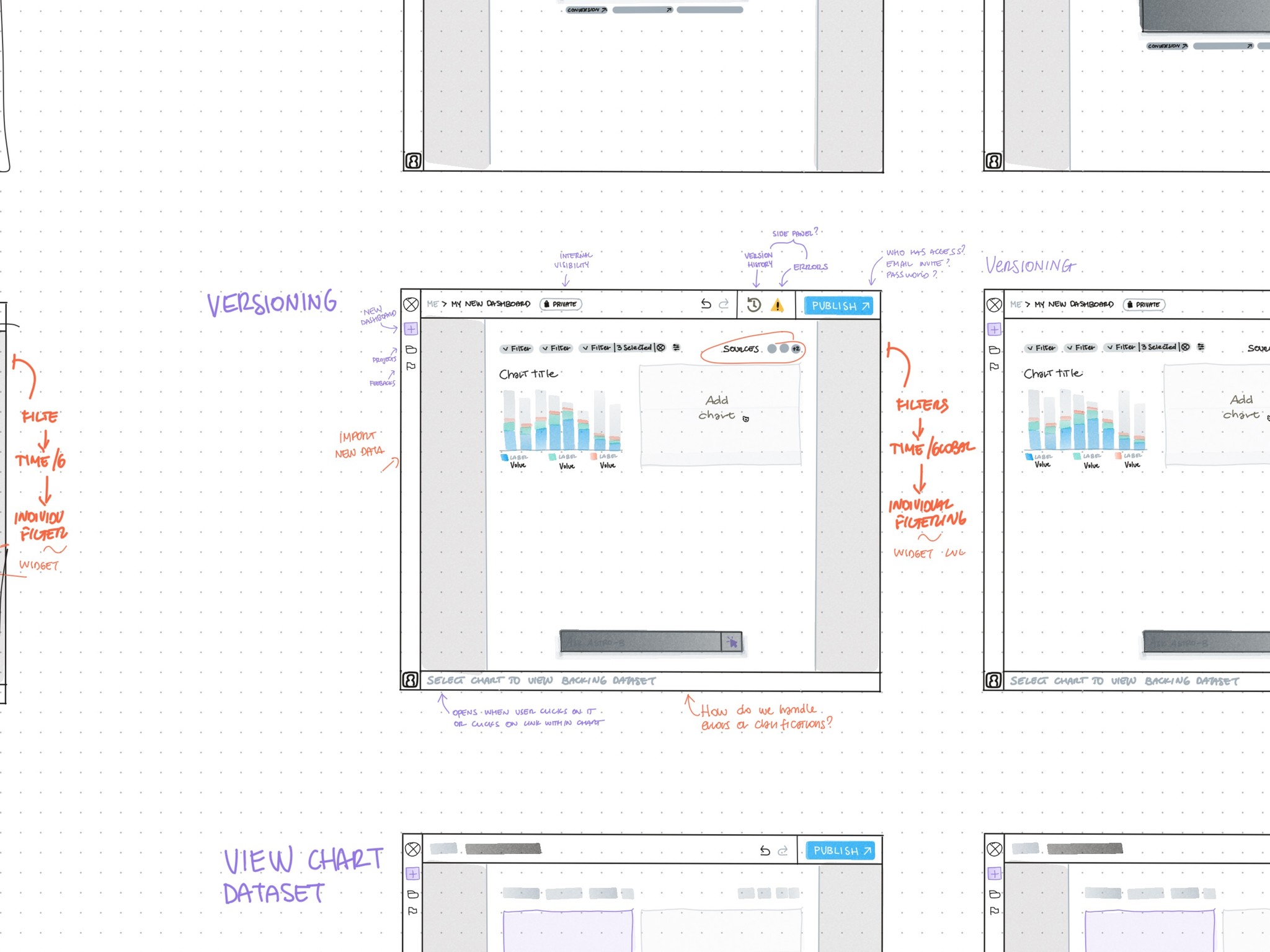
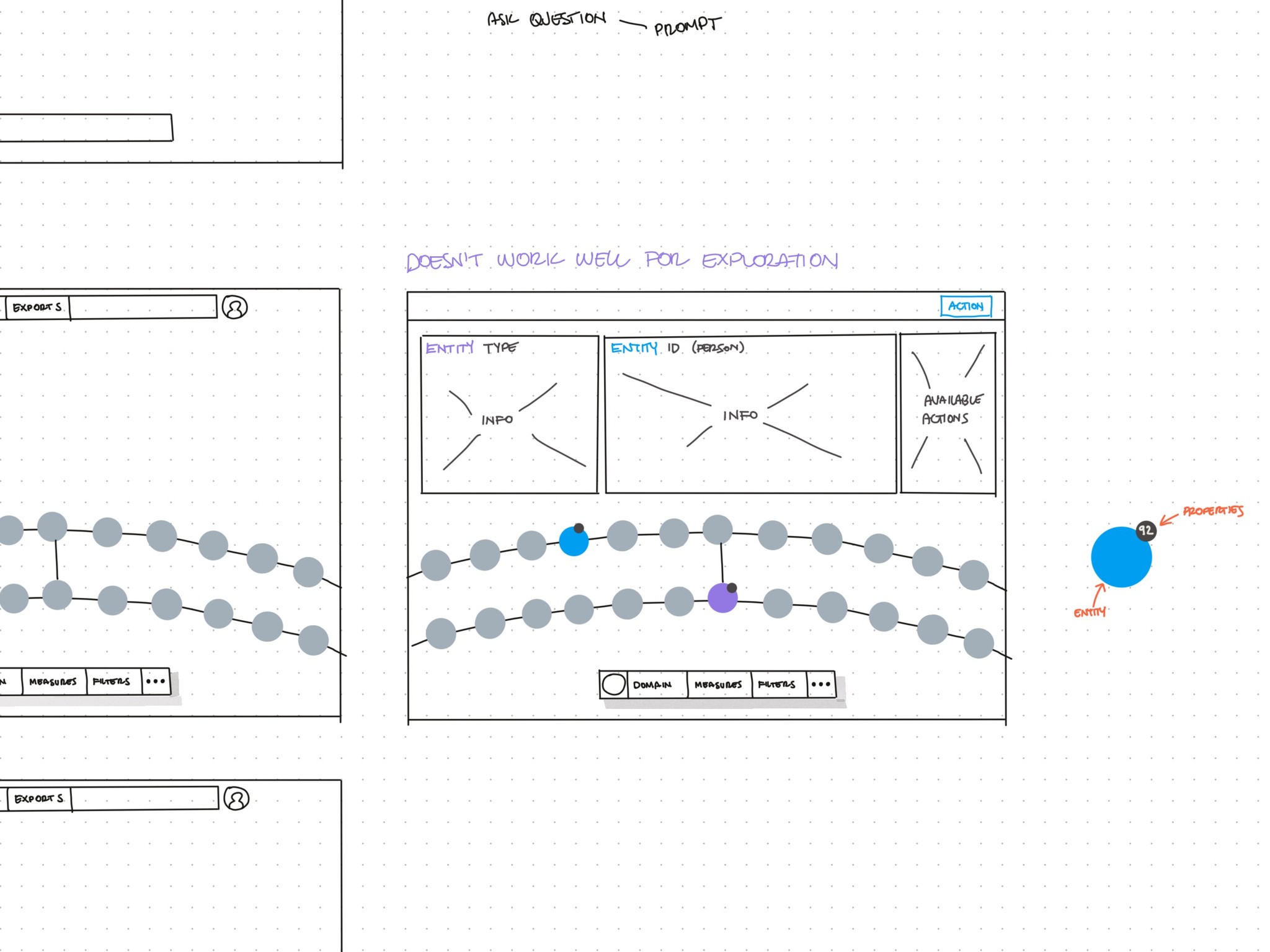
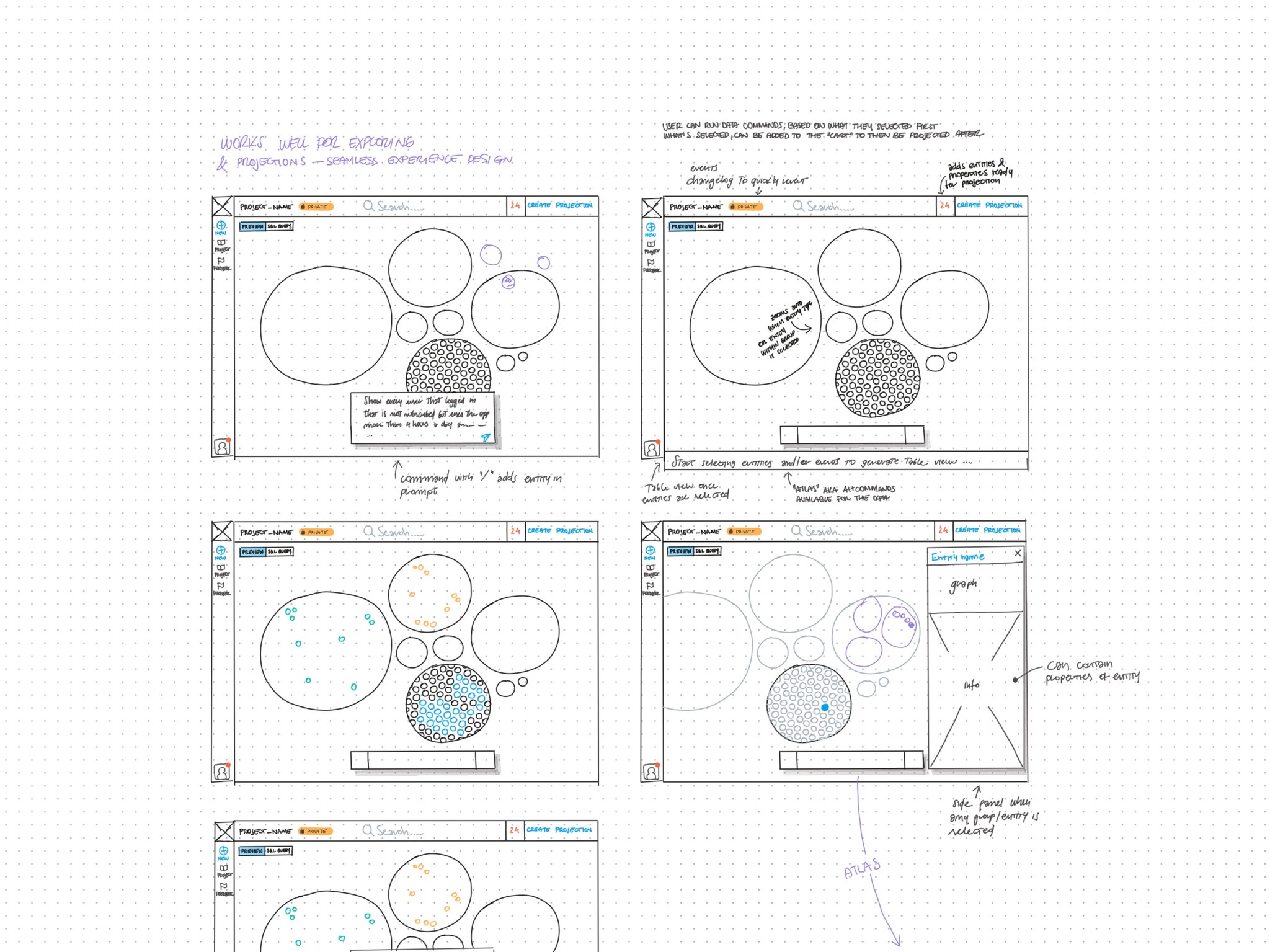
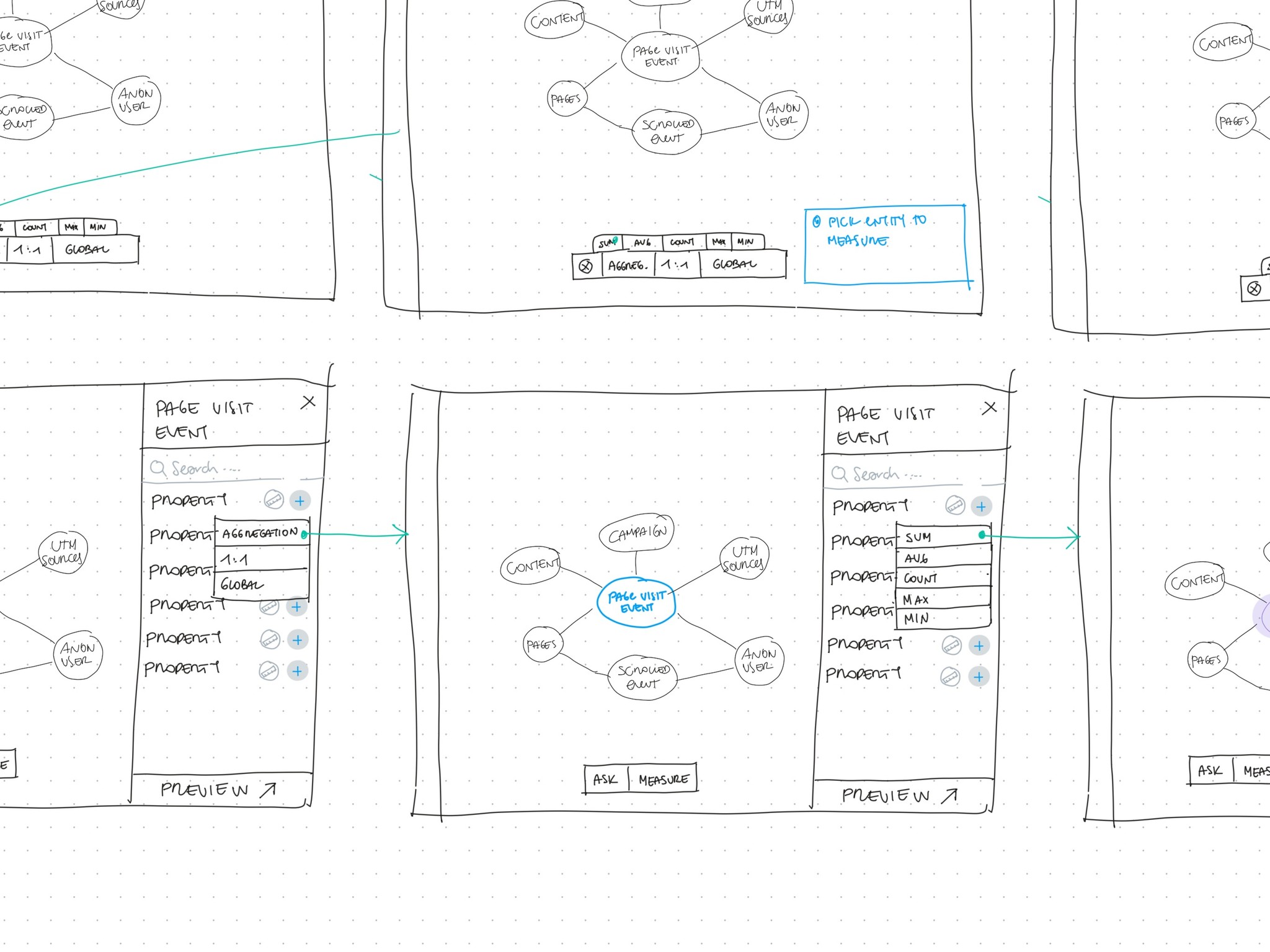
Early sketches from my initial product exploration, informed by user interviews and AstroBee’s team insights. The first (and most recent) sketch shows the evolution from a text-to-dashboard to a text-to-insight concept. The following sketches are earlier explorations focused on generating and manually refining the semantic layer of imported data.
Higher Fidelity, Design System and Branding
At first, we were designing the product assuming our users would be very technical: people who like to customise and configure everything, almost like engineers. So the early product ideas gave them a lot of control and flexibility.
But as we continued speaking with more users across different companies, a very clear pattern emerged: most of them did not want to spend time configuring or personalising anything. They didn’t want a toolbox: they wanted answers.
They cared about speed, clarity, and trustworthy AI recommendations, not manual setup. Their priority was: “Just show me what matters, and tell me why.”
This changed the direction of the product as I then began to abstract complexity even further.
We shifted from building a tool that users would “program” to building an intelligent system that proactively explains what it finds, surfaces important signals automatically, and keeps the user in control through transparency rather than technical configuration.
That’s also where the decision became clear that the AI shouldn’t just be reactive: it should proactively flag changes, explain its reasoning, and evolve its understanding about the user data in a way that always feels safe and intelligible, even to someone who isn't a data engineer.
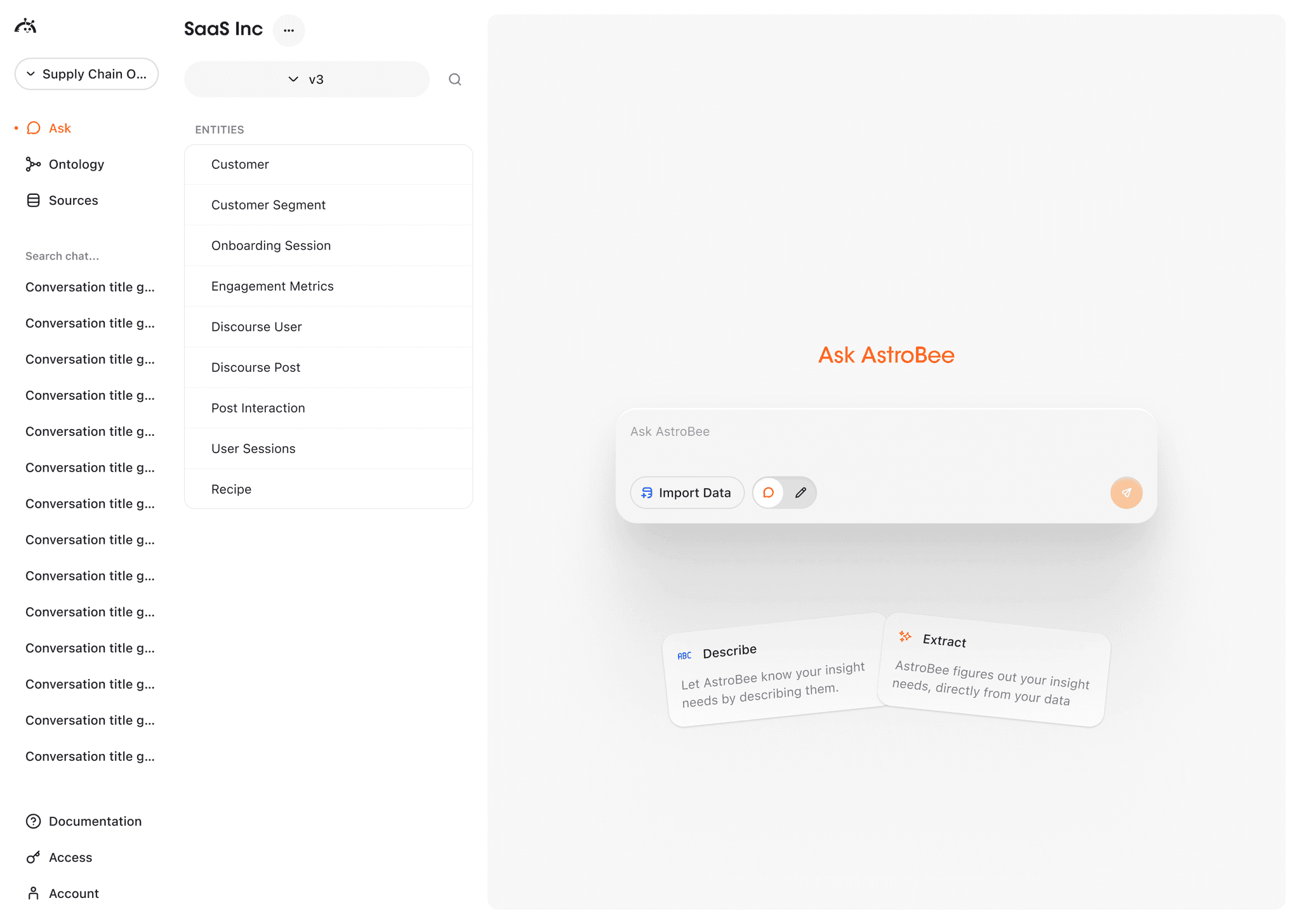
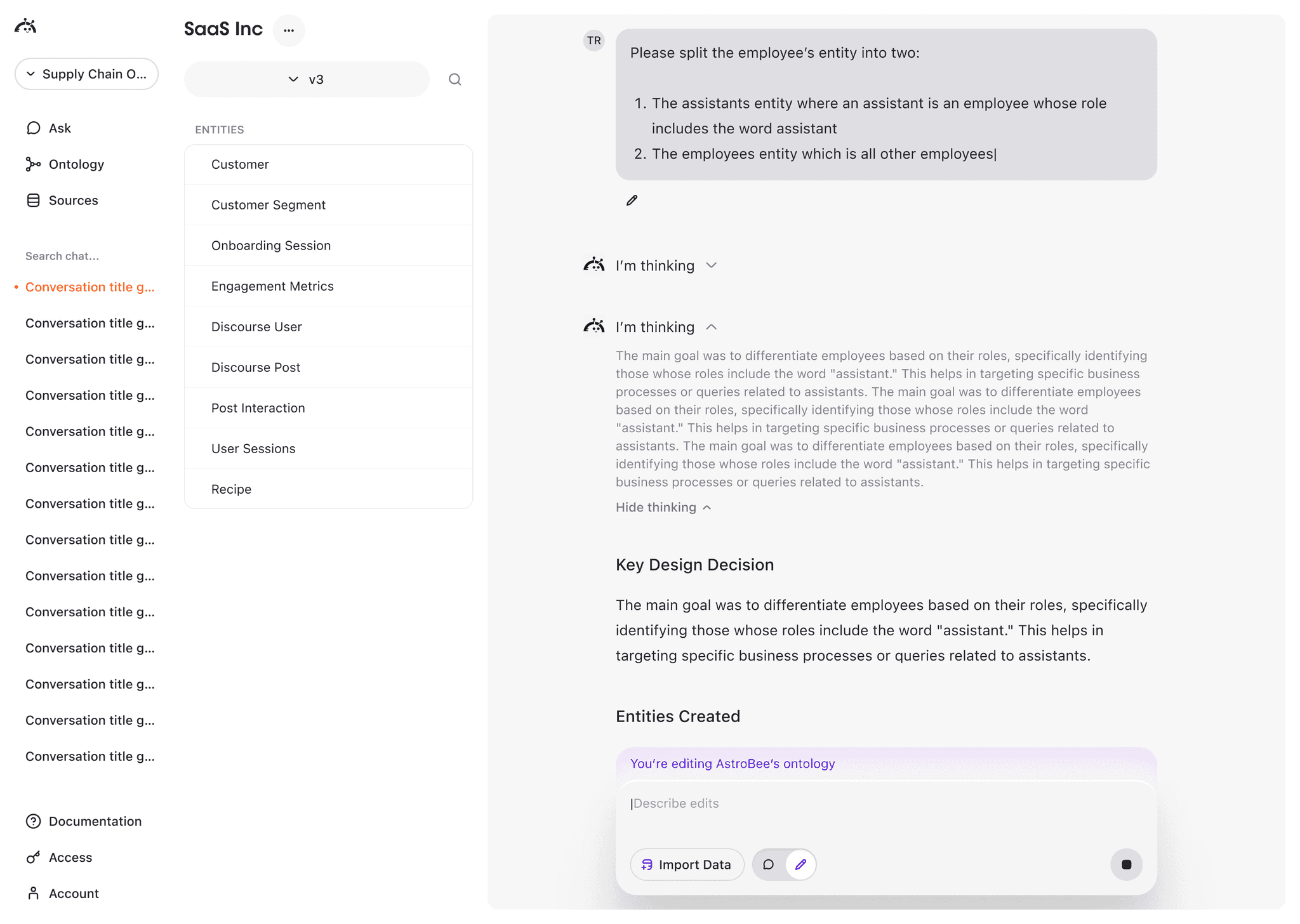
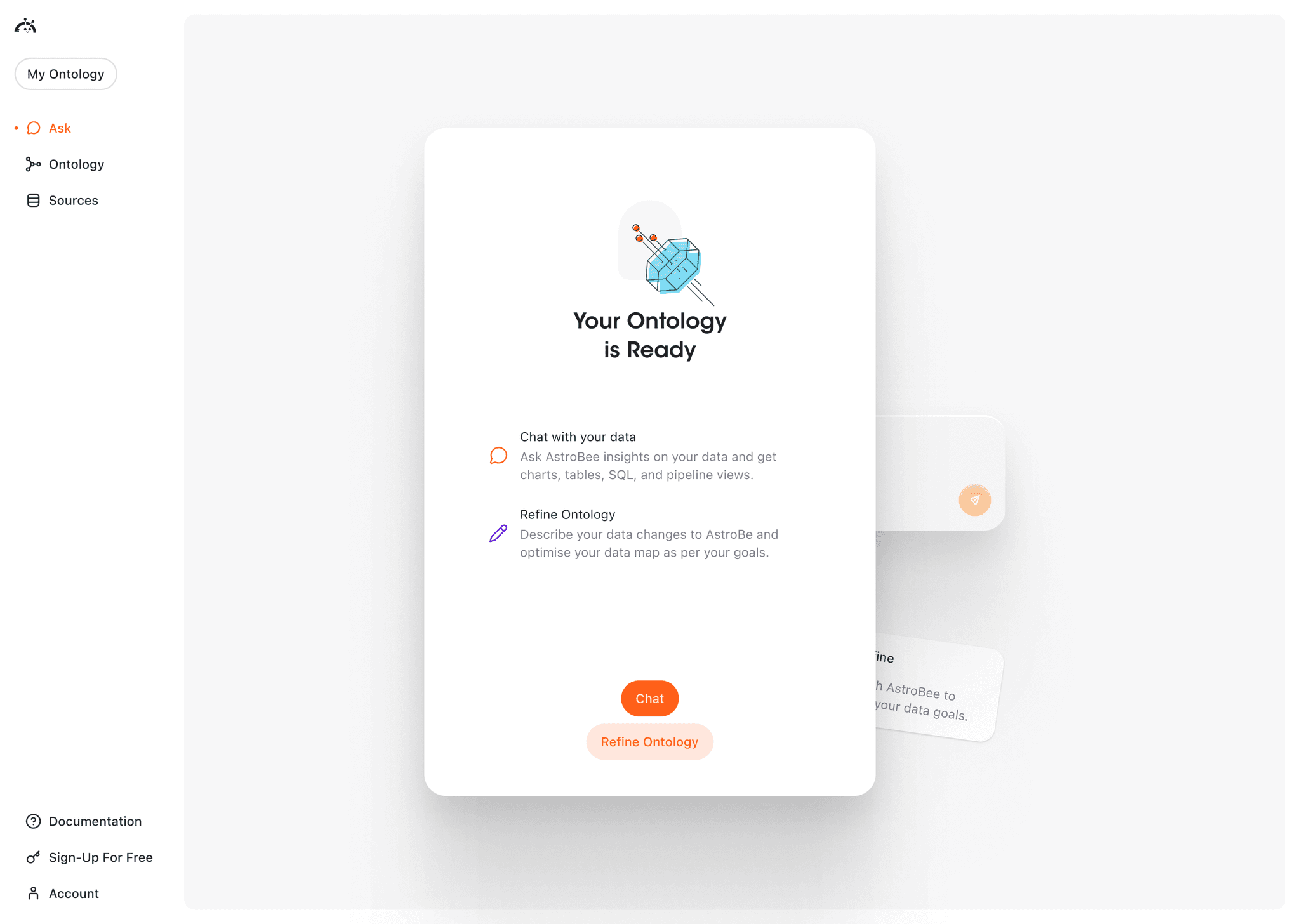
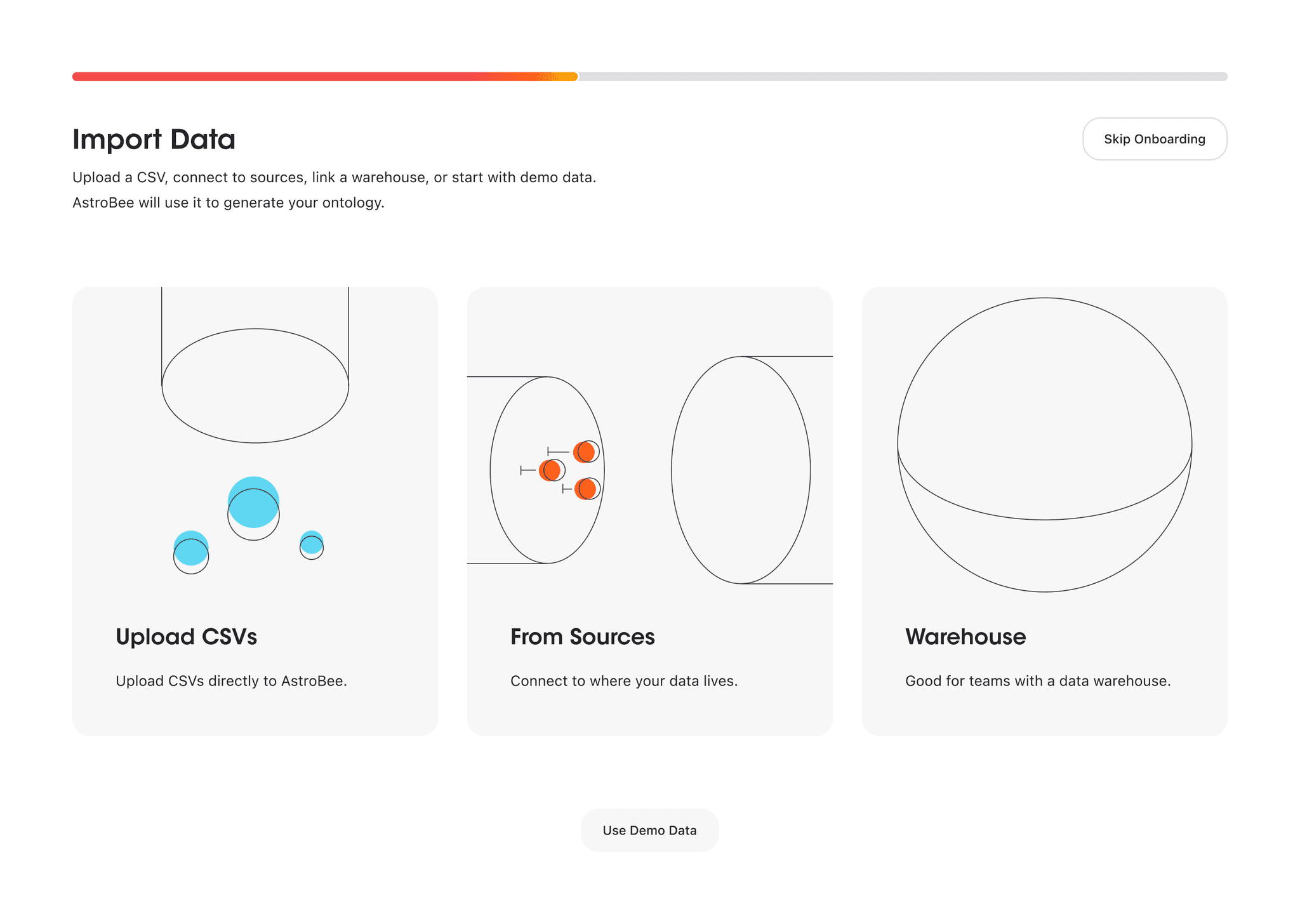
Refined interface design, including its very own design system (designed for speed), brand design and storytelling and familiar interaction design patterns on similar applications.
Communicating Design Decisions
Early stage and long run design often requires communicating to different types of people. Communicating with a visual artefact compared to words helps convey much more information when paired with a visual language as it contains much more details
To increase clarity of expectations and results and communicate decision making to broader teams, so not only engineers, I often relied on documented interface blueprints [below] and prototypes.
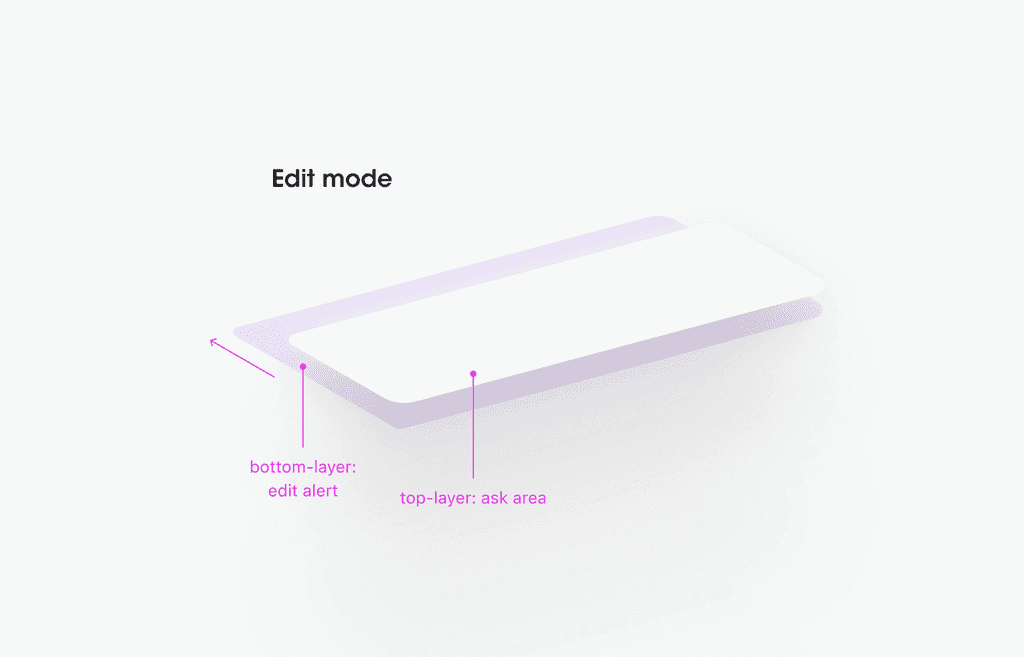
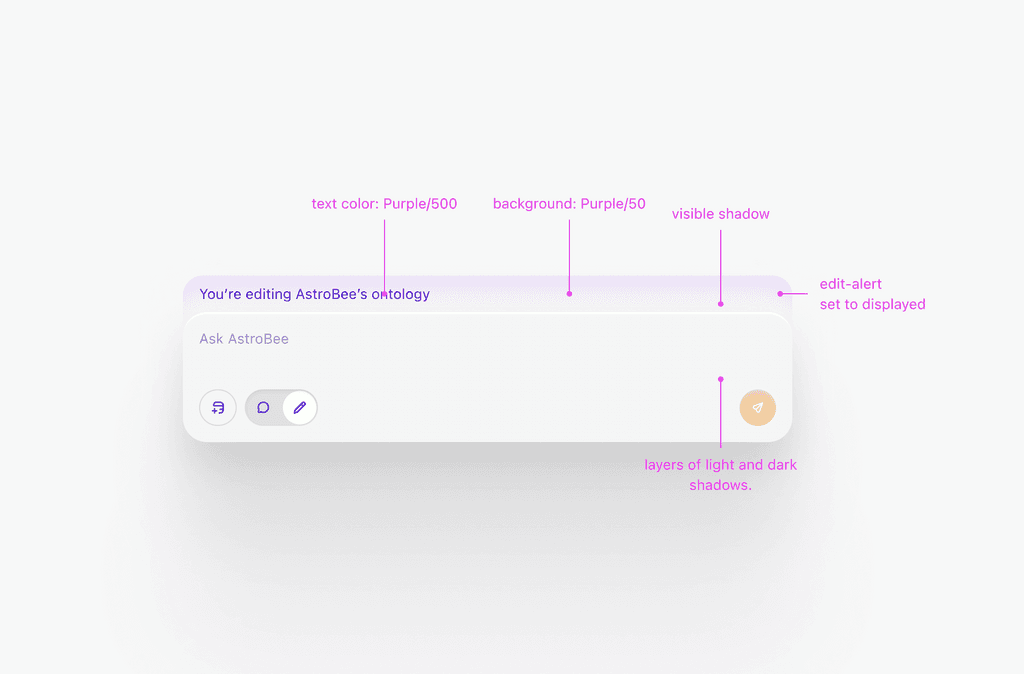
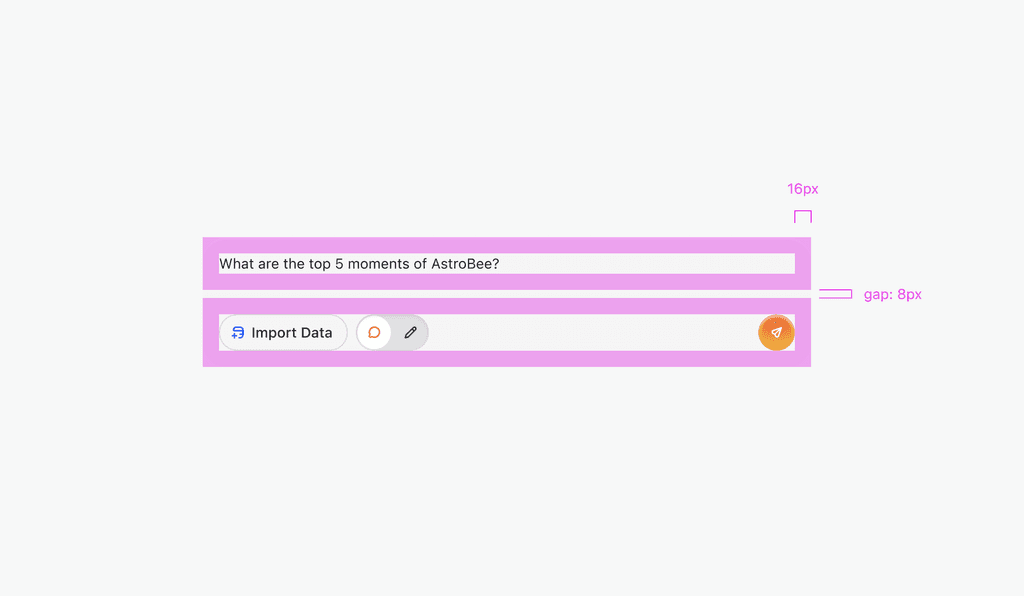
Blueprint documentation for “Atlas” — the interaction pattern used by most applications built with Artificial Intelligence (AI). Atlas defines the pattern through which user input is captured and sent to the AI. Atlas is a name derived from the idea of a map: a guiding surface the user navigates to interact with the AI.
You're the Space Explorer, guided by AstroBee
AstroBee’s narrative is shaped around the Explorer archetype: the user steps in as a modern-day Marco Polo: curious, ambitious, and eager to uncover what’s hidden in the vast chaos of enterprise data.
Astro isn’t the hero, but the guide: a quiet cartographer of the unseen, structuring the raw, uncharted territory into intelligible ontologies and surfacing new “discoveries” as insights.
The inspiration for this storytelling comes from historical journeys of exploration and knowledge-mapping: from Renaissance navigators to Borges’ infinite libraries, merging intellectual wonder with pragmatic intelligence.
My contribution has been defining this brand essence from the ground up: architecting AstroBee’s identity as an AI guide for explorers, not another dashboard tool. I drove the narrative coherence across product, onboarding, motion video, and microcopy, ensuring every moment feels like an expedition, not a query box.
On the brand identity front, I led Zivan Roic through an Art Direction brief i wrote myself, setting the conceptual direction for the logo and initial visual language, translating exploration and intelligence into form, while preserving emotional subtlety rather than sci-fi cliché.
Brand illustration styling informed by the concept of space traveller. The 2D flat design with isometric grid helps convey simplicity through the usage of basic shapes.
Wrapping up
From there, we focused on making AstroBee feel less like a passive interface and more like an intelligent partner.
Instead of asking users to “set things up,” the product now proactively reveals structure, insights, and changes over time, always explaining what it found and why it matters, before the user even asks.
After a year of collaboration with the team, I managed to:
• Define and deliver the core product
• Design unique and familiar interaction design patterns
• Define and deliver a design system for Artificial Intelligence based application
• Participate to weekly calls with users for feedbacks and collaborative design
• Wrote industry articles to leverage awareness on how to use AstroBee
• Built interactive prototypes using both code and basic sequence of screens
• Contributed to the development of AstroBee using Artificial Intelligence
• Defined and delivered end-to-end brand and its storytelling (Astro, the space astronaut)
The work described above reflects a high-level and selectively summarised view of my contributions to AstroBee’s product strategy and experience design. This narrative is intentionally concise and does not represent the full scope of my involvement (which also included adjacent responsibilities such as coordinating external designers for brand assets, shaping early website direction, drafting product messaging and PR material (including AI-assisted workflows), and supporting broader go-to-market narrative thinking.
All concepts, product strategies, workflows, and intellectual property referenced remain exclusively owned by AstroBee.
This document is shared strictly for the purpose of demonstrating my design process and strategic thinking: it does not claim ownership of any underlying technology, implementation, or proprietary framework developed by AstroBee.
Any confidential or commercially sensitive elements have been abstracted or generalised in full respect of the contractual obligations and IP rights agreed with AstroBee.