The true nature of branding is not a marketing tool, but a modern continuation of an ancient human function: the transmission of essence, identity, and meaning across generations. It explores the origins of branding, why most brands fail to exist beyond utility, and how companies can evolve into everlasting brands: those that shape human culture rather than just participate in it.
Branding
•
6 minutes reading
Oct 21, 2025
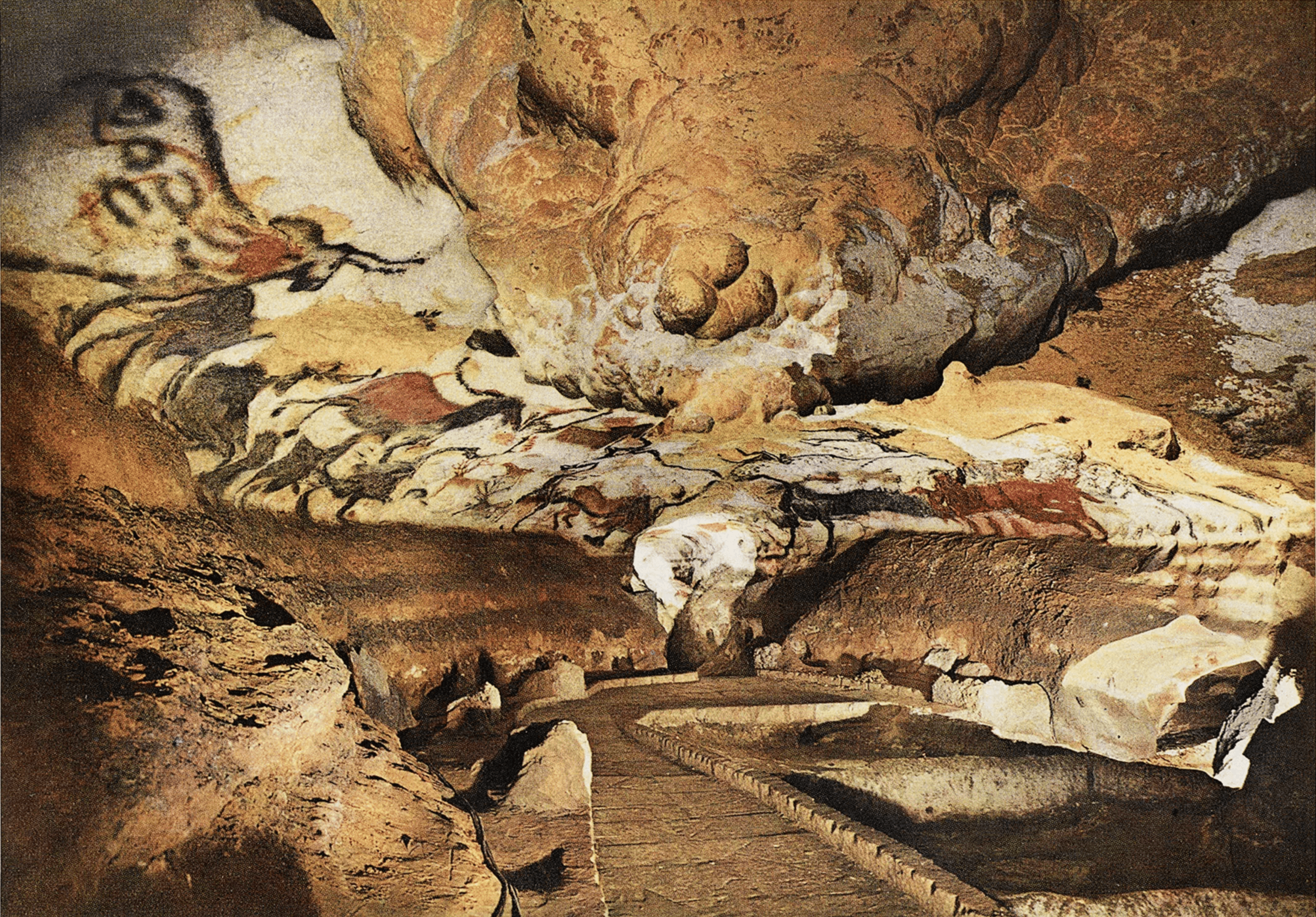
Lascaux Cave, Hall of the Bulls. Photograph from Lascaux: Chapel of Prehistory, by Abbé Henri Breuil, Albert Skira, 1955.
History
Before the term branding ever existed, humans were already transmitting identity, belief, and purpose through symbolism and storytelling. Symbols served not as decoration, but as containers of essence, carrying values, myths, and survival knowledge across time. Storytelling was not entertainment; it was an existential mechanism for cultural continuity.
Only in modern capitalism did the word “branding” emerge: a business term that attempted to rationalise something far older: the human need for identity made visible, a way for an entity to declare its place in the world and be remembered.
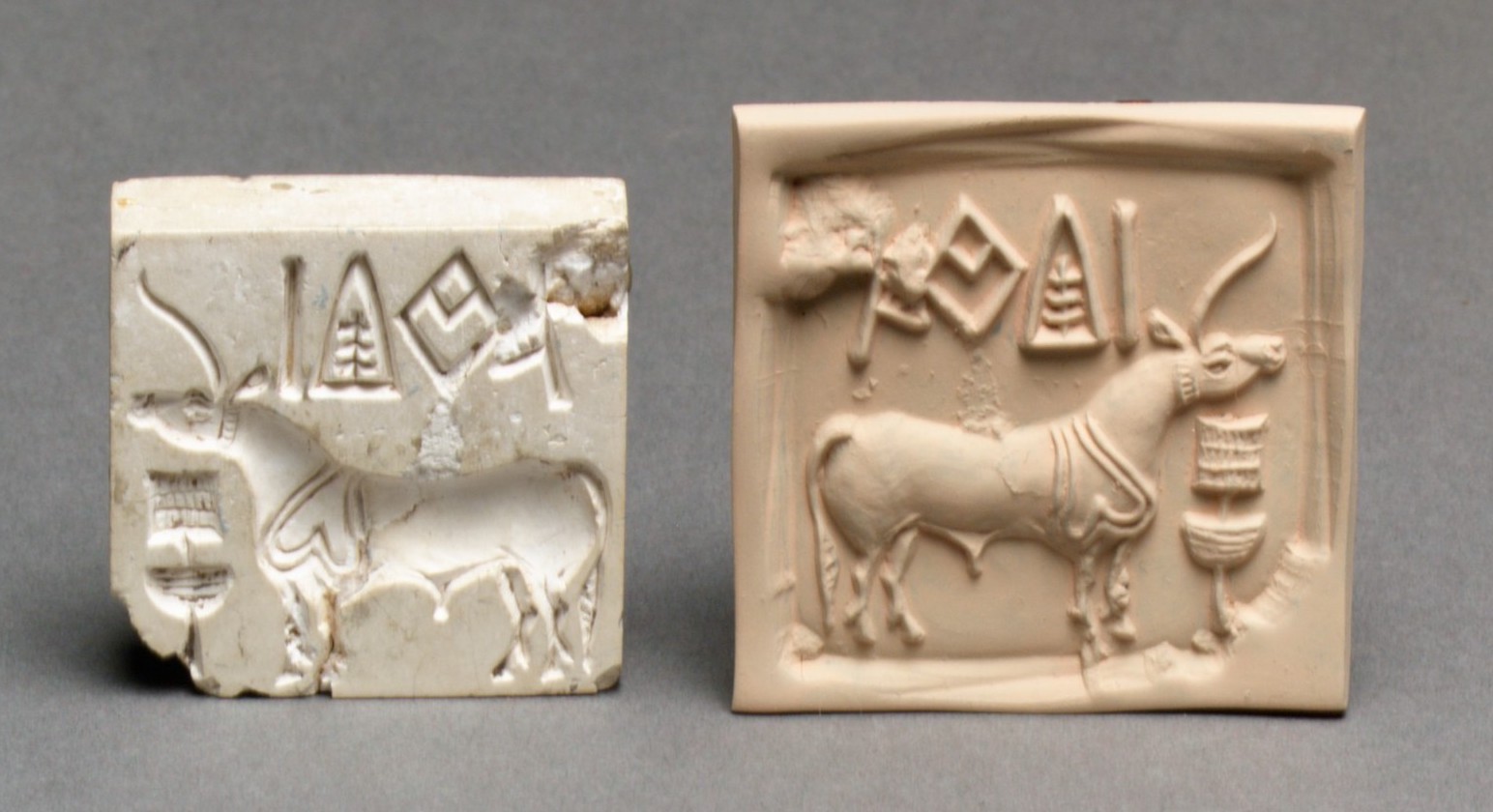
Stamp Seal with a Unicorn and Inscription. Indus Valley Civilization (ca. 2600–1900 BCE). Steatite, baked/treated. Excavated at Mohenjo-daro, present-day Pakistan. The Metropolitan Museum of Art, New York, Accession no. 1981.450.15. Public domain. Image includes original seal (left) and modern impression (right).
Stock Market Crash: Identity Crisis
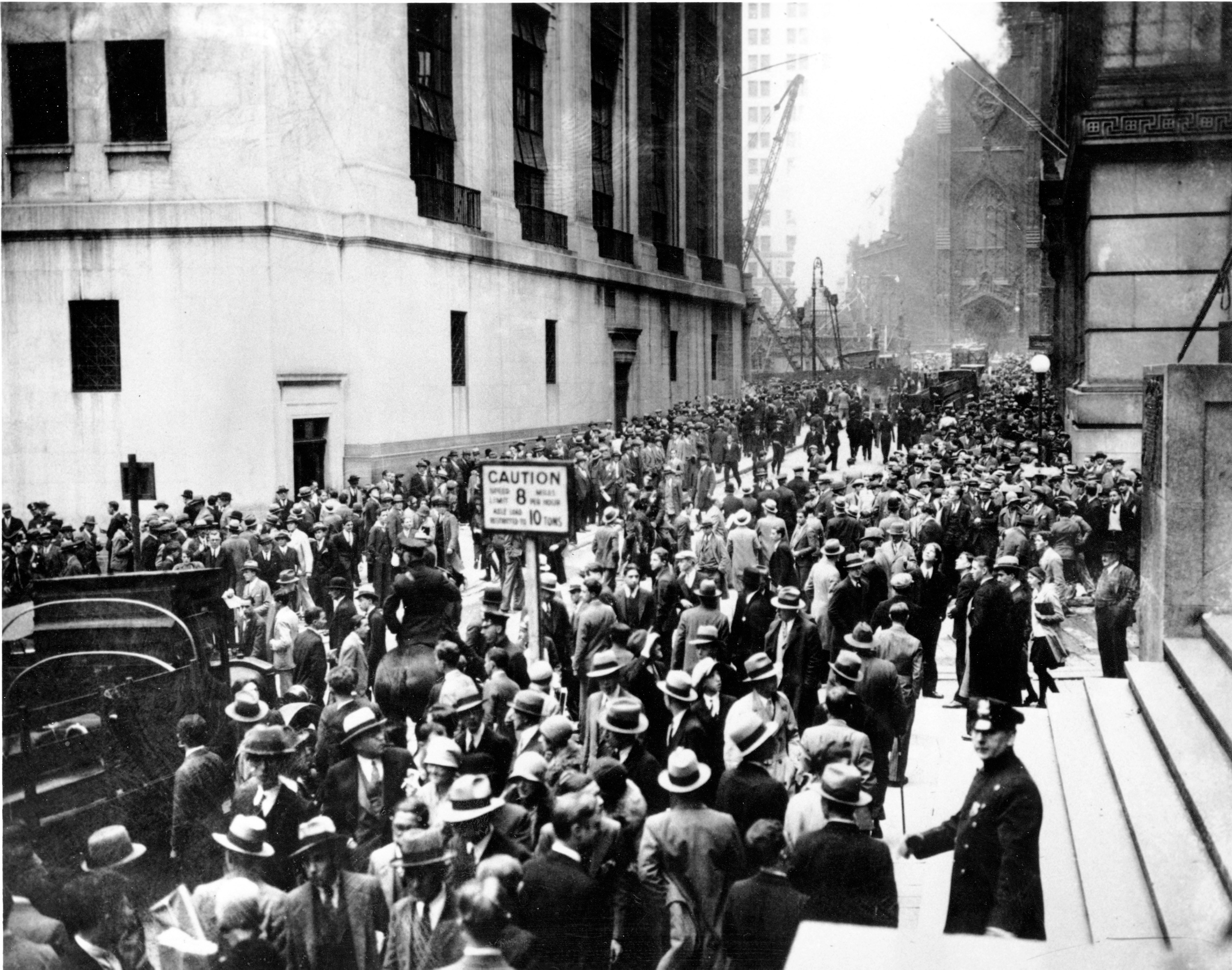
As companies industrialised identity expression, many began projecting surface-level brands with no inner essence. The 1929 stock market crashes of the past century exposed this illusion: companies without identity collapsed fastest. In response, organisations began asking: Who are we, truly? What do we stand for beyond products?
Here’s when the influence of Carl Jung started. His research in archetypes revealed that humans are irresistibly drawn to entities that not only reflect their dominant archetype, but also awaken dormant ones within them. The brands that endured were those that embodied a living myth, not just a visual style.
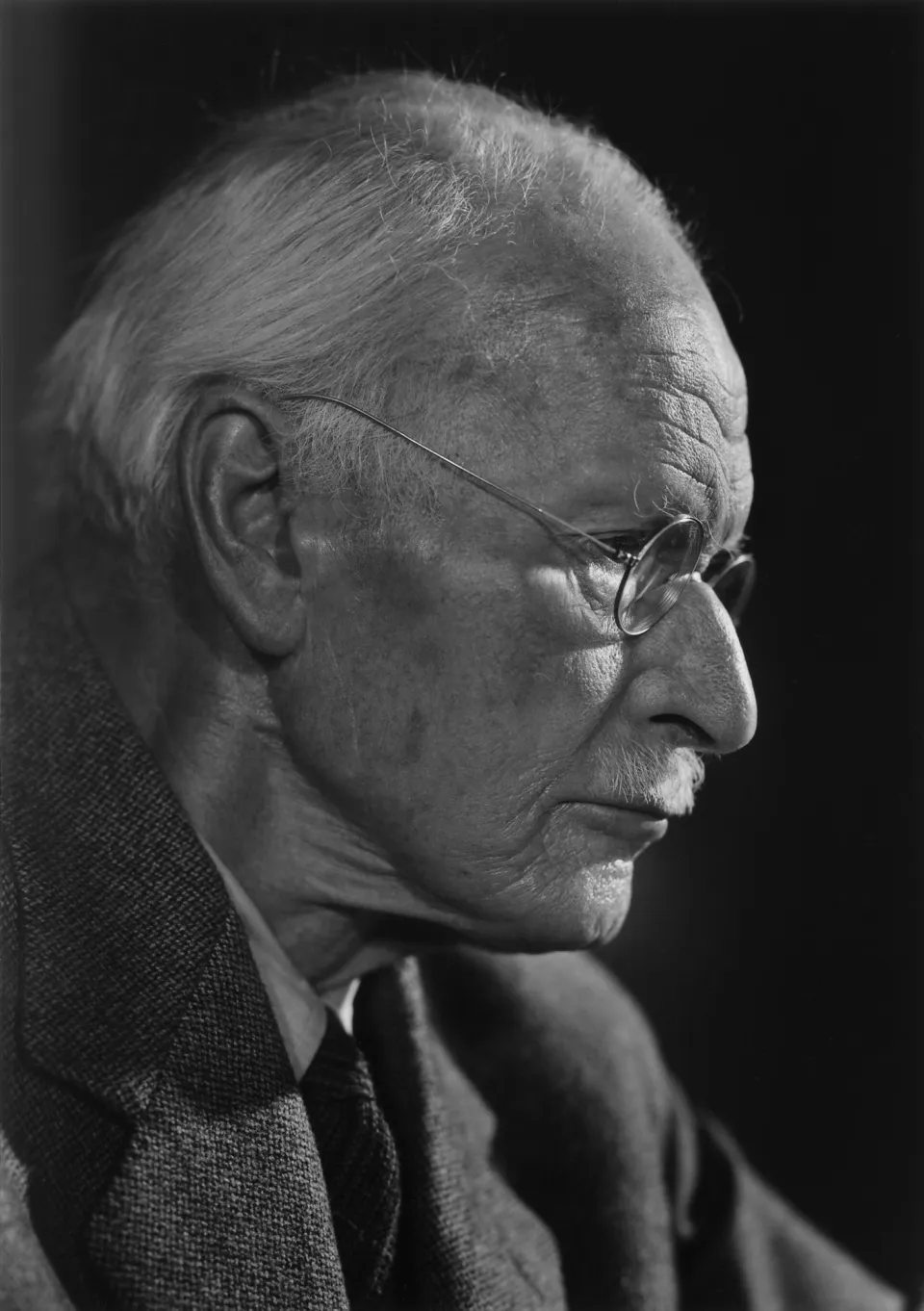
Carl Jung portrait by Yousuf Karsh. Jung’s archetypes form the psychological DNA behind enduring brands [and human beings].
Modern Branding
For the past two decades, most companies have mistaken branding for visual design and messaging, focusing on what they do and how they do it, while leaving unresolved the far more fundamental questions of who they are, why they exist, and who they exist to evolve.
In doing so, many companies attempt to skip the maturation process by trying to artificially manufacture outcomes such as “initiated users” or “awakened emotional resonance” without embodying the preceding causal states that make those reactions real. They begin from the end-state outputs instead of passing through the necessary identity-evolution process, where ritual-level symbolic expression emerges only after true awakening and not as a tactic.
This has resulted in three distinct states of brand consciousness:
Absent
A company with no sense of identity. It operates as part of the undifferentiated mass. It has not yet realised it is a “Self”. There is no story, only function.
At this stage, the artefacts a company produces are purely reactive and utilitarian, lacking intention or authorship:
Disconnected visual elements (random colours, premade UI kits)
Inconsistent tone or messaging across channels
No symbolic continuity (every execution feels isolated)
Design decisions made for immediate necessity, not identity expression
There is output but no signal of self.
Primordial
The company begins to notice its difference from others. It forms preferences and aesthetics, attempts to express uniqueness, but still lacks existential grounding. Branding here is often visually polished but emotionally empty.
At this stage, output evolves from random expression into internal structural formation: the beginning of self-organisation:
Emergence of design systems, reusable UI foundations
First attempts at consistent visual logic across surfaces
Documented but still shallow brand principles / tone guidelines
Internal alignment begins (not yet storytelling) but laying the groundwork for a future voice
The brand is not yet narrating identity, but preparing to find one.
Awakened
A company reaches self-realisation. It understands its origin journey: from absence to awakening, and can communicate this story with clarity and purpose. Every decision aligns to a coherent essence and serves a transformational purpose. It does not just sell: it teaches, shapes, and evolves its audience.
At this stage, brand artefacts become vehicles of cultural contribution, not just presentation:
Product experiences are emotionally intentional, not merely usable
Ritual-level symbolic expression: users feel initiated, not converted
Communication is not explanatory: it awakens dormant archetypes
The brand becomes a cultural asset, not a market participant
This is where a company stops “signaling itself” and begins shaping human meaning.
A brand at an awakened stage does not merely express its own evolution: it actively teaches evolution.
By communicating its journey of self-realisation, the awakened brand acts as a mirror and catalyst for its audience. It models the process of introspection, maturity, and identity-integration (not as strategy, but as a lived example). In doing so, it invites people not just to consume, but to Self-actualise.
Society evolves through such mirrors. At this level, brands do not respond to culture as they actively advance human consciousness itself.

Billboard advertising suburban home with swimming pool, Maryvale development, Phoenix, Arizona. Produced by Foster & Kleiser Outdoor Advertising, for John F. Long Home Builders, c. 1950s. Archival public-domain photograph.
The Challenge
Human society is undergoing an existential shift, driven by global power realignments and, critically, the emergence of artificial intelligence. AI is not just changing tools; it is changing how reality is authored, interpreted, and transmitted.
This moment forces every company to confront its existential state. Those who remain absent will be absorbed. Those who are primordial must mature or dissolve. Those who are awakened must strengthen and expand their mythic function or risk being culturally overwritten.
Polynesian Star Compass, Polynesian Voyaging Society archives. Used by navigators to find their way using stars. Just like a brand.
Branding Begins With Being
To build a brand is not to design visuals, it is to declare a reason to exist. It requires clarity on what the company does, who it serves, why it exists, and the story that proves its inevitability.
Once a company locates its essence and archetype, it gains an existential compass, every product, strategy, and decision becomes aligned and truthful.
Brand-Led Product Creation
When a company truly understands its archetype and the archetype it exists to awaken in its audience, product design stops being feature-based and becomes myth-aligned.
The brand begins making decisions like (and not limited to):
If the brand is The Creator: its products must enable creation, not just consumption. Tools, studios, open-ended systems, not locked funnels. For instance, Apple in its peak leads creating Mac, GarageBand, iPhone as creator catalysts.
If the brand is The Sage: its products must reveal truth, simplify complexity, deliver clarity. Knowledge engines, not dopamine engines. For instance, Notion, Wolfram, Wikipedia.
If the brand is The Explorer: products must expand territory, give freedom, unlock maps. For instance, Patagonia, Land Rover, Airbnb (in the early founder era).
If the brand is The Caregiver: products must reduce fear, reassure, heal. Stability-first, not disruption-first. For instance, Dove, Mayo Clinic, Headspace.
Brand here is not a filter added after and instead, it is the governing intelligence before the product even exists.
It informs:
Which products are even allowed to exist or not
Which features reinforce the archetype vs. betray it
What is sacred, what is forbidden, what is inevitable
At this level, brand becomes a mechanism of product discipline, not just expression.
A recent example is Apple. With its renewed “glass” design language, it has returned to its Creator archetype, reasserting its identity of “thinking different.” Whether one agrees with every choice is irrelevant, the compass is active again.
It speaks to all who are creators, or long to awaken that within themselves.
This article will not yet expand into strategy, finance, operations or hiring. Its sole thesis is this: A brand must express who it truly is and what it exists to awaken.
Every asset (from an icon to a campaign) must not merely inform, but ignite recognition, inviting the observer into self-realisation.
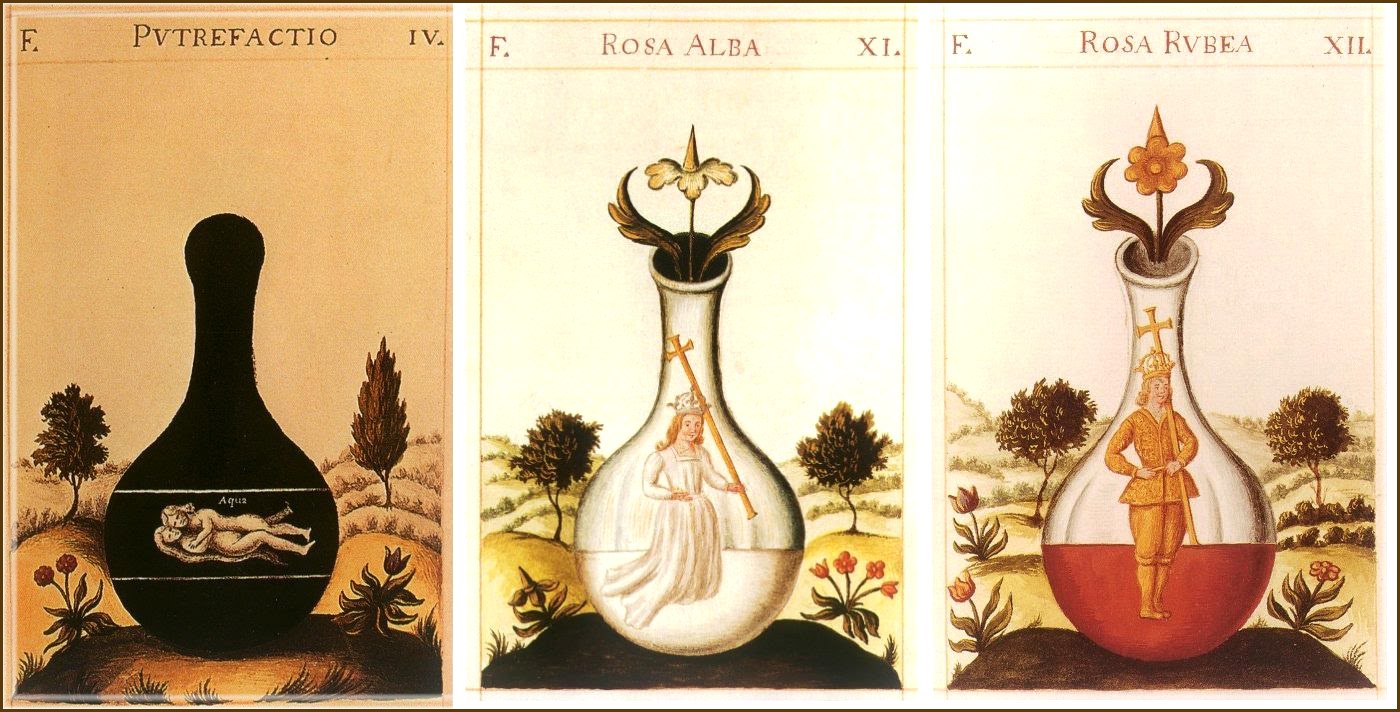
Early modern alchemical manuscript plates depicting stages of transmutation (“Putrefactio”, “Rosa Alba”, “Rosa Rubea”). Hand-coloured engraving, attributed to 17th–18th century European esoteric tradition. Public domain reproduction.
Conclusion
A brand is not built to be seen. Brand is built to be felt. Brand exists not to describe itself, but to activate recognition in others: to awaken a dormant part of the human being that says “this is where I belong”.
The companies that will define the next era are not the most funded, nor the most optimised, but the ones that carry a living essence, a reason to exist so clear and inevitable that every expression (design, product, strategy, finance, recruiting) is simply its consequence.
In an age where AI begins to co-author reality itself, the function of branding is no longer presentation but it is existential anchoring.
A brand must become a compass, not a costume. A brand is a force that orients human direction, not a surface that reacts to it.
Those who accept this role will not merely compete, they will participate in shaping human memory, identity, and myth at planetary scale. That is the true responsibility (and the privilege) of an awakened brand.
The Hero and the Outlaw, by Margaret Mark (Author), Carol S. Pearson (Author) https://www.amazon.it/Hero-Outlaw-Building-Extraordinary-Archetypes-ebook/dp/B00IHCLCL4